(Reading time: 17 minutes)
In this series, we describe practical ways our tools have been used by believers worldwide to share the message of the gospel.
In the following article, we will begin by focusing on how fathers, mothers, grandparents and other parental figures can share the good news with the children in their lives.
We hope you will find these tried and tested suggestions helpful. We also invite you to share your own experiences with us to benefit others. You can write to us via our contact form.
COMMON CHALLENGES
AN APPROACH
TRIED AND TESTED HOW-TOS:
AGES 5-10
AGES 10-15
AGES 15 AND UP
OTHER SUGGESTIONS TESTIMONIES
RELATED ARTICLES
Many Christian parents can identify with this sentiment from the apostle John:
“I have no greater joy than to hear that my children are walking in the truth.” 3 John 1:4 NIV
Before our children can walk with God, they first need to have a meaningful opportunity to put their faith in Christ for salvation. Only then can they begin their journey with God.
When children have a creation-to-the-cross perspective of the gospel message, it becomes the framework upon which the rest of Scripture can be built.
Many of us want our children to have a good grasp of the good news but we have questions and concerns as to how we can teach them. We may be thinking:
As an equipping ministry, the following tried-and-tested ideas have helped many parents with this task. But first, it would be beneficial to understand some of the key challenges.
“How do I share the gospel so my children have strong foundations upon which to build their Christian lives?”
Most believers turn to the gospel of John when sharing the gospel. Rightfully so, because this is the main reason why John wrote the book:
“These are written that you may believe that Jesus is the Messiah, the Son of God, and that by believing you may have life in his name.” John 20:31 NIV
The message was clear to the original audience. Those of Jesus’ day knew the background stories and understood the Old Testament history that John draws on to explain the gospel.
However, the accounts we read in John took place millennia ago in another time and culture far removed from the world with which our children are familiar. Today we don’t have the same background knowledge that John’s original audience had.
Children today don’t have the same background knowledge that John’s original audience had.
In the first two chapters alone, there are no less than 55 references to concepts, customs, characters and geographical places which are either foreign to most people today or their significance isn’t understood. This includes such terms as: Lamb of God, Moses, priests, baptizing, Jewish Passover and temple.
In such cases, communicating the gospel clearly will be a challenge because they lack the context in which the message was conveyed.
An Approach to explaining the gospel message to our children
Consider this scenario: Pick out a new book to read to your child. Begin by reading a section in the middle of the book, before flipping back to the introduction to read. Then jump to another chapter. As you skip from page to page, not only would you probably succeed in confusing your children, but they would also feel very frustrated by the way they heard the story told in such a fragmented way.
How then should we share the gospel in a meaningful way with our children? From our experience, here are five recommendations:
These four irreducible minimums are:
I. A Holy God
II. A Helpless Sinner
III. A Sufficient Substitute
IV. A Personal Faith
Frequently, the first point—a Holy God—has been understated or overlooked, yet it is key to one’s grasp of the gospel. For more information on the irreducible minimums, read this article.
This chronological method of sharing the gospel has an added benefit: it provides an important framework for helping your child understand the rest of Scripture. With the core story in place and the foundation set, when a child reads the rest of Scripture, he or she has enough structure, background and understanding to properly understand the other sections of the Bible. The clothesline is in place and the child can hang the other portions of Scripture in its correct place.
Time Requirement: Do this as fast as you can but as slow as you must. This helps the children grasp the story as one narrative while ensuring they understand the content. This will take approximately 2 hours on average.
Read: Cover one chapter a day over 10 days, or two chapters a day for five days; or cover the whole book in one sitting. However, do not rush through it.
Ensure understanding: Ask your children the questions at the end of each chapter. Make sure they can answer all the questions accurately. If they are not able to, read the relevant portion and ask the questions again. Do this till they understand it clearly. Do not progress in the story until they grasp the early chapters.
Retell: At the end of the book, ask them to retell the story. Listen to the details as they retell to check for understanding. If they forget or stumble, go back to that section and read it to them again.
Believe: Ask them questions found at the end of the book and in this link to determine what they believe.
Reinforce: Download the audio version of The Lamb or listen to it on SoundCloud for free. Play it during a car ride. Let them listen and follow along in the book on their own. Do this often till they know the story well.
Visual Aid: If you would like a lamb as a visual aid to help them remember the message, you can consider using this.
Colour: Offer colouring pages to help your children remember the main points.
Craft: Do a lamb craft as a fun activity to reinforce the lessons. Try this.
Study: Using a Bible, help your children look up the verses listed at the bottom of the pages in The Lamb. Explain the Bible verses in the context of how the book was presented to them. This trains children to look up Scripture and gets them into the habit of checking what is taught against what God’s Word says.
Additional tools: The Lamb is also available in DVD format. After you have guided your children through The Lamb, the DVD can be used to reinforce what they have learned.
The options below cover varying formats of learning and engagement levels. Choose one that works best for your family.
If you prefer to read:
Time Requirement: It takes about 8-9 hours to read aloud the entire 8-book set. Ideas for setting aside the time to teach the Bible:
Read: Read the books out loud together. The parents read the commentary while the children read the Bible verses. This allows Scripture to impact a child most directly. This works best if each person has their own book set or if one book is shared by two.
Review: At the end of each section, ask if your children understand. Ask them to summarize key points. Only answer questions pertaining to that section. Defer other questions, as many common ones are answered as you progress in the book. Take note of questions by writing them down and putting them aside to be answered later.
If you would like a more interactive learning experience, complete with workbook and visual aids:
Time Requirement: Set aside at least one hour for each session. The entire content takes about 12-15 hours. The shorter the span of time taken to cover the content, the more cohesive the gospel story will be to them.
We recommend taking no more than 6-7 weeks to complete this. Some block off 2 hours every weekend. Others take an hour each day over 2-3 weeks.
Read: Each person would need to have his own book and a highlighter. Go through the book together, reading out loud. The parent can read the commentary while the children read the Bible verses. This allows Scripture to impact a child most directly.
Highlight: In reading the content together, the parent will guide the children to highlight the important statements with a marker.
Watch: At the relevant sections, pause to play the relevant video clip on the DVD.
Visual Aids: Use the visual aids at the appropriate times. These are helpful in explaining and reinforcing many key ideas in a way that is particularly meaningful to children. Often, they will see the visual aid and recall the teaching point.
Review: After each section, pause to allow your children to fill in the workbook questions. Review the answers together. Ensure they understand. Read again the sections they do not understand well and attempt the review questions again.
Further engagement using visual aids: Basic ToolBox: Get your children to help assemble the visual aids in preparation for the relevant sections.
Tabernacle Model: Make this a family activity to assemble the model kit. You can also paint the kit with your children.
Review options using visual aids: To check for understanding, pick up a visual aid, give it to your child and ask him to retell the story using the visual aid. Or, ask him to express in his own words the teaching point that the visual aid is making.
While No Ordinary Story Series will also work for this age group, here are other options to consider.
Note: These books cover more topics and answer more questions. They address many misconceptions people have about God. Even if your children have gone through No Ordinary Story already, one of these books acts not only as a good refresher, but also familiarizes them to biblical answers to questions that people with secular worldviews may have. It would not be uncommon for them to have friends who subscribe to these worldviews.
Read independently: Time requirement: Depending on ability, By This Name takes around 12-15 hrs and The Stranger takes 10-12hrs. If your children prefer to read on their own, ensure you are actively engaging them in conversation as they read through the book by checking their understanding. Take their questions seriously, though it is best to refrain from answering questions the book will cover until they finish reading the book. Once they have finished, set aside time to ask them what they think.
Study as a family: See the suggestions above for Ages 10-15. These same guidelines translate to studying By This Name or The Stranger together.
Note: This Videobook covers the content of The Stranger. This is a helpful way to learn—alone or together—without the necessity of a leader. If your children no longer live at home, you may choose to send them the link to the online version. They can learn at their own pace.
Time Requirement: This is an 11-hour series. Add in more time if using the workbook. It would be best to set aside fixed times each week with the intent of finishing the series within no more than 5-6 weeks.
Watch: Watch the video together. It is broken up into segments of between 4-27 minutes each.
Review: Review the questions using the workbook.
If your children clearly understand the message of the gospel and trust Jesus for their salvation, you can shift your focus to building their faith. One thing you can do immediately is share with them the mandate of being ambassadors for Christ.
For ages 10 and up:
Ee-Taow! The Mouk Story and The Next Chapter
Watch this film together. Focus on how the Mouk people, upon understanding and believing, immediately took it upon themselves to share this good news with others. Even though they were new in the faith, they shared what they had learned.
Encourage your children to do the same. Have older children help you teach younger siblings or encourage them to read the books with their friends.
Here are some stories of how children shared with their friends:

Gloria’s 7-year-old daughter, Jessie, recently started asking questions like “Who made the world? Where did people come from?” As a child, Gloria had gained some Bible knowledge from her Grandma and from summer camps, but now all she could tell Jessie was “God made the world.” But that wasn’t enough for Jessie. Learn what Gloria did next.

Our fourth grade daughter decided she wanted to give The Lamb as a part of her Valentines to her classmates. We are not allowed to distribute these at our public school, so she plans to mail them. Read more.
Any parent who has little ones knows they have no problem with repetition. They’ll sing the same songs over and over and over again! It’s actually a helpful way to learn.
In that vein, GoodSeed tools aren’t meant to be put on the shelf when you’re done with them. Many families find there is benefit in re-using GoodSeed tools.
As kids grow, they glean new insights and their depth of understanding increases by going through the story of the Bible from creation to the cross again. The Stranger contains over 1100 Bible verses explained in context; No Ordinary Story contains around 1000; By This Name contains over 1500. That’s a lot of Scripture—a powerful influence on a child’s life.
You will be surprised at the different discussions that come up each time your children go through the study. Again, it’s another way to shore up their foundations of understanding “so when they are old they will not turn from it.” (Proverbs 22:6)
Many families have seen another benefit from doing the study more than once. It provides training so that your children will know how to guide others through the gospel message. Following the same method of reading together, they can lead a classmate, a neighbour, a cousin, or even a small group through the gospel.
In order to give your children a good grounding in the gospel message, you must be deliberate in managing your family’s Bible study time. If the message of the gospel is to make sense, you need to guide your children through in as short a time as possible without rushing. This is because the gospel story is a continuous narrative, and taking too many breaks or dragging it out too long makes the story fall apart. Your children will start to forget and the stories will be disconnected, losing their vital meaning and connection.
Now, you may be thinking, “But our family’s schedule is crazy! How can we fit that much time into our week for Bible teaching?” You know what? You can’t. Something has to give.
“Look carefully then how you walk, not as unwise, but as wise, making the best use of the time, because the days are evil.” (Ephesians 5:15-16 ESV)
You may need to cut back on extra-curricular activities. Reduce the time spent on TV or video games. Whatever is necessary, just do it and stick to it! Remember the time we have with our children is short and the years pass quickly. There is no time like the present to set aside a regular teaching time to help your children truly understand God’s Word. It may be the most powerful influence you will ever have on the direction their lives take.




For many children, Christmas is the best holiday of the year with Christmas gifts, a tree trimmed with decorations, and feasting! They grow up with many happy memories of Christmas. As believers, we especially want our children to remember Christmas as a time when Jesus is the focus of our attention. We want to cultivate memories of celebrating God coming to earth to fulfill his promise of a Saviour. We want our children to recognize that Christmas is part of the larger story of the gospel of Jesus. Read more.

John sighed to himself as he tucked his children into bed, “How am I supposed to teach my children what they need to know about God when there just aren’t enough hours in a day!” Read more.
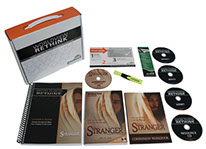
It is important for moms and dads to ground their families in God’s Word. But many parents (especially fathers) are so busy providing, it’s difficult for them to find time to share the truths of God’s Word with their children. Many parents also don’t feel comfortable teaching the Bible because they haven’t had any “training.” Where should they start?